
Dishwasher Not Cleaning Dishes? Here’s What to Do
A dishwasher that doesn’t clean dishes properly can quickly turn into a daily frustration. You open the door expecting spotless plates, only to find food residue, cloudy glasses, or greasy cookware that needs rewashing by hand.
If your dishwasher is running but not cleaning effectively, the problem is usually fixable—sometimes with a simple DIY step, other times with professional appliance repair.
In this guide, we’ll break down why dishwashers stop cleaning properly, what you can do about it, and when it’s time to call a professional dishwasher repair service in Bend, Oregon
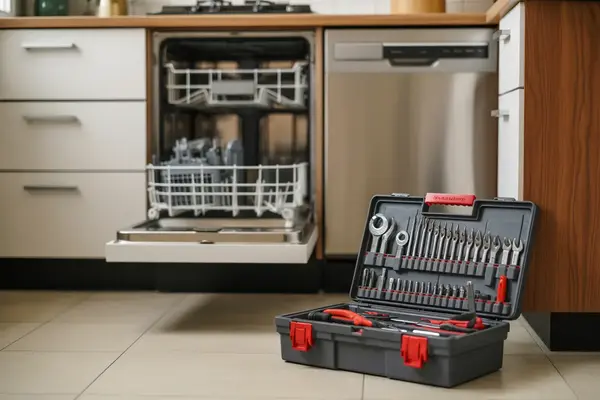
Why Is My Dishwasher Not Cleaning Dishes Properly?
Dishwashers rely on a precise combination of hot water temperature, spray pressure, detergent activation, and mechanical movement. When any one of these components fails—or even performs slightly below normal—cleaning performance drops fast.
Common issues include:
- Poor water circulation
- Mineral buildup from hard water
- Blocked filters or spray arms
- Incorrect detergent or loading habits
- Worn or failing internal components
Homes in Central Oregon, including Bend, are especially prone to hard water–related dishwasher problems, which makes routine maintenance even more important.
Common Reasons Your Dishwasher Isn’t Cleaning Dishes
Clogged or Dirty Dishwasher Filter
The dishwasher filter traps food particles, grease, and debris to prevent them from redepositing on dishes. Over time, this filter becomes clogged.
Symptoms include:
- Grit or food particles left on plates
- Standing water at the bottom of the tub
- Bad odors inside the dishwasher
A dirty filter restricts water flow and reduces cleaning power, making this one of the most common causes of poor dishwasher performance.
Spray Arms Are Blocked or Not Spinning
Spray arms distribute high-pressure water throughout the dishwasher. If the holes are clogged with food debris or mineral deposits, water can’t reach your dishes effectively.
Common signs:
- Top rack dishes remain dirty
- Food stuck on corners of plates
- Spray arms feel stiff or don’t rotate freely
Blocked spray arms are especially common in dishwashers used without regular cleaning cycles.
Low Water Temperature
Dishwashers need hot water (120°F–140°F) to dissolve detergent and remove grease.
If your water isn’t hot enough:
- Detergent won’t activate fully
- Grease and oils won’t break down
- Glassware may appear cloudy or streaky
This issue often points to a water heater setting, faulty heating element, or timing issue where the dishwasher fills before hot water reaches the line.
Using the Wrong Detergent or Poor-Quality Soap
Not all dishwasher detergents are created equal. Using:
- Old detergent
- Low-quality soap
- Excess detergent
- Liquid soap instead of dishwasher-specific detergent
can lead to poor cleaning, residue buildup, or excessive suds that interfere with spray action.
Hard water homes in Oregon often require detergents formulated with water softeners.
Overloading or Improper Dish Loading
Cramming dishes too close together blocks water spray paths and prevents detergent from reaching all surfaces.
Common loading mistakes include:
- Nesting bowls
- Blocking the spray arms with tall items
- Placing plastics on the bottom rack
- Overcrowding silverware baskets
Even a perfectly functioning dishwasher won’t clean properly if dishes are loaded incorrectly
Hard Water Buildup (Common in Oregon Homes)
Bend and surrounding areas often experience moderate to hard water, which contains high mineral levels like calcium and magnesium.
Hard water causes:
- White residue on dishes
- Scale buildup inside spray arms
- Reduced detergent effectiveness
- Shortened dishwasher lifespan
Over time, mineral buildup restricts internal components and degrades cleaning performance.
Faulty Detergent Dispenser
If the detergent dispenser door doesn’t open at the right time, soap won’t release properly during the wash cycle.
This can be caused by:
- Broken latch
- Warped dispenser door
- Electrical control issues
- Detergent caking inside the compartment
When detergent releases too early or not at all, dishes come out dirty regardless of cycle length
Inlet Valve or Water Pressure Problems
Dishwashers rely on proper water pressure to circulate water effectively. A failing water inlet valve or restricted supply line can prevent enough water from entering the unit.
Signs include:
- Weak spray action
- Incomplete cycles
- Dishes still cold after washing
Low water pressure often requires professional diagnosis.
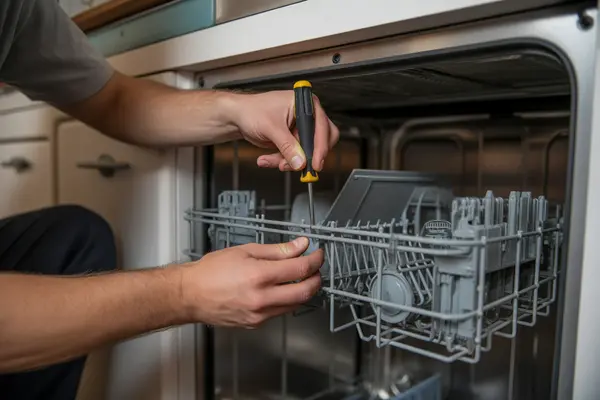
How to Fix a Dishwasher That’s Not Cleaning (DIY Steps)
Step 1 – Clean the Dishwasher Filter
- Remove the bottom rack
- Twist and lift out the filter
- Rinse under warm water
- Scrub gently with a soft brush
- Reinstall securely
Clean the filter every 2–4 weeks, especially in hard water areas like Bend.
Step 2 – Unclog and Clean Spray Arms
- Remove spray arms (check manual)
- Use a toothpick or wire to clear holes
- Soak in warm vinegar water to dissolve minerals
- Rinse thoroughly and reinstall
Ensure arms spin freely before running the dishwasher again.
Step 3 – Check and Improve Water Temperature
- Run hot water at the sink before starting the dishwasher
- Verify water heater is set to 120°F
- Use high-temperature wash settings when available
If dishes are still cold after a cycle, the heating element may be failing.
Step 4 – Use the Right Dishwasher Cycle
Light or eco cycles may save energy but reduce cleaning power.
For heavily soiled dishes:
- Use Normal, Heavy, or Auto cycles
- Enable heated dry or sanitize options when needed
Short cycles often don’t provide enough time for proper cleaning.
Step 5 – Load Dishes the Right Way
- Face dishes toward spray arms
- Keep space between items
- Place glasses on the top rack
- Avoid blocking detergent dispenser
- Don’t stack bowls
Proper loading alone can dramatically improve results.
When DIY Fixes Don’t Work
If you’ve cleaned the filter, spray arms, checked detergent, and improved loading—but dishes are still dirty—it’s likely an internal mechanical or electrical issue.
Common professional-level problems include:
- Failed circulation pump
- Malfunctioning heating element
- Control board errors
- Water inlet valve failure
- Sensor malfunctions
Continuing to run a malfunctioning dishwasher can cause further damage and higher repair costs.
Professional Dishwasher Repair in Bend, OR
When your dishwasher still isn’t cleaning properly after basic troubleshooting, professional repair ensures the problem is accurately diagnosed and fixed the right way. A local dishwasher repair technician in Bend, OR can identify hidden issues that DIY methods often miss.
From testing water pressure and heating performance to inspecting pumps, valves, and sensors, expert technicians handle every critical component. They replace worn or faulty parts as needed and restore your dishwasher’s full cleaning efficiency, helping you avoid repeat issues and extend the life of your appliance.
Why Choose Appliance Repair Bend OR?
Appliance Repair Bend OR is a team of trusted local specialists with hands-on experience repairing all major dishwasher brands. We provide fast response times, accurate diagnostics, and transparent pricing with no hidden fees, so you always know what to expect.
As a locally based service, we understand common Bend-area issues like hard water damage and mineral buildup. Homeowners across Bend, OR trust us for reliable repairs that restore performance, extend appliance life, and deliver long-lasting results.
Frequently Asked Questions
Why does my dishwasher leave white residue on dishes?
White residue is usually caused by hard water minerals, excessive detergent, or poor rinsing. Using rinse aid and cleaning internal components can help
Can hard water cause a dishwasher to stop cleaning?
Yes. Hard water reduces detergent effectiveness, clogs spray arms, and causes scale buildup that restricts water flow.
How often should I clean my dishwasher filter?
Every 2–4 weeks, or more frequently if you wash heavily soiled dishes.
Is it worth repairing an old dishwasher?
If the repair cost is less than 50% of replacement cost and the unit is under 10 years old, repair is usually worth it.
Why is my dishwasher not cleaning dishes as well as it used to?
Gradual performance loss is often due to mineral buildup, worn components, or clogged filters that worsen over time.
Why are my dishes still dirty after the dishwasher cycle?
This may indicate poor water circulation, blocked spray arms, low temperature, or a failing pump.
Is it OK to put vinegar in the dishwasher?
Yes, occasionally. Vinegar helps dissolve mineral deposits, but excessive use can damage rubber seals
How to unclog dishwasher arms?
Remove them, clear holes with a toothpick, soak in warm vinegar water, rinse, and reinstal
Schedule Dishwasher Repair in Bend, Oregon
If your dishwasher still isn’t cleaning properly, don’t waste time rewashing dishes or risking further damage.
Schedule professional dishwasher repair in Bend, OR today and get your kitchen routine back on track with fast, reliable service you can trust.
Contact Info
Information





- 2026
- HomeFixly Appliance Repair.
- All rights reserved.