
Refrigerator Leaking Water? 9 Common Causes (and Solutions)
A refrigerator leaking water can quickly turn from a minor annoyance into a serious household problem. Puddles on the kitchen floor, water pooling inside the fridge, or moisture dripping from the freezer are all warning signs that something isn’t working as it should. Beyond the mess, ongoing leaks can damage flooring, promote mold growth, and even affect the performance and lifespan of your appliance.
The good news? Most refrigerator water leaks are caused by common, well-understood issues—and many of them are preventable or fixable with the right approach. In this in-depth guide, we’ll break down why your refrigerator is leaking water, explain the 9 most common causes, and show you practical solutions to stop the leak for good.
Why Is My Refrigerator Leaking Water?
A refrigerator manages moisture constantly. Between cooling cycles, defrost systems, condensation, ice makers, and water dispensers, there are several components designed to move water safely out of the appliance. When any part of this system becomes blocked, damaged, misaligned, or worn out, water can escape where it shouldn’t.
Common factors behind refrigerator leaks include:
- Defrost drain clogs
- Frozen drain lines
- Faulty water supply connections
- Door seal problems
- Excess condensation due to humidity
- Ice maker or dispenser malfunctions
Understanding the exact source of the leak is the first step toward a proper fix.
9 Common Causes of a Refrigerator Leaking Water (and How to Fix Them)
A refrigerator leaking water is rarely a random issue—it’s usually the result of a specific component failing to manage condensation, melted ice, or incoming water correctly. Modern refrigerators rely on a combination of defrost systems, drainage pathways, door seals, and water supply connections to keep moisture under control. When even one of these elements malfunctions, water can end up pooling inside the fridge, leaking from the freezer, or dripping onto your kitchen floor.
The key to fixing the problem is accurate diagnosis. Some causes are simple DIY fixes, while others require replacement parts or professional repair. Below, we break down the nine most common reasons refrigerators leak water, explain why each issue happens, and walk you through practical, safe solutions to stop the leak at its source.
1. Clogged or Blocked Defrost Drain
A clogged defrost drain is the most common cause of water leaking inside a refrigerator. During the automatic defrost cycle, frost melts off the evaporator coils and flows through the defrost drain into a drain pan beneath the appliance. Over time, food particles, grease, dust, and mold can clog this drain opening.
When the drain is blocked, water has nowhere to go. Instead of draining away, it pools at the bottom of the freezer or refrigerator compartment and eventually leaks onto shelves or the floor. You may notice water collecting under crisper drawers or sheets of ice forming near the freezer base.
How to fix it:
Unplug the refrigerator and locate the defrost drain (usually behind the freezer’s rear panel). Flush the drain with warm water using a turkey baster or squeeze bottle. Clear debris with a flexible brush or pipe cleaner. Regular cleaning every 6–12 months helps prevent repeat clogs.
2. Frozen Defrost Drain Line
A defrost drain doesn’t have to be dirty to fail—it can also freeze solid. A frozen defrost drain line usually occurs when cold air circulates unevenly, the defrost heater isn’t working properly, or the freezer temperature is set too low. When melted frost refreezes inside the drain tube, it creates an ice plug that blocks water flow.
This issue often causes ice buildup on the freezer floor, followed by water leaks once the ice partially melts. Many homeowners clean the drain repeatedly without realizing freezing—not debris—is the real issue.
How to fix it:
Manually thaw the drain using warm water or a hair dryer on a low setting. Avoid sharp tools that can puncture the drain tube. After thawing, check the defrost heater, defrost thermostat, and freezer temperature (ideal is around 0°F / -18°C). Ensuring proper airflow prevents future freezing.
3. Cracked or Overflowing Drain Pan
The drain pan sits beneath the refrigerator and collects water from the defrost system, allowing it to evaporate naturally. Over time, this pan can crack due to age, heat exposure, or movement during cleaning or relocation. In other cases, the pan may shift out of alignment or overflow due to excessive condensation.
When the drain pan fails, water leaks directly onto the floor underneath the refrigerator, often unnoticed until significant pooling occurs. This can damage flooring and encourage mold growth.
How to fix it:
Pull the refrigerator away from the wall and locate the drain pan. Inspect it for cracks, warping, or overflow. If damaged, replace the pan with a manufacturer-approved part. Ensure it sits properly beneath the drain outlet to collect water efficiently.
4. Loose or Damaged Water Supply Line
Refrigerators with ice makers or water dispensers rely on a pressurized water supply line, typically made of plastic, copper, or braided steel. Over time, these lines can loosen, crack, or degrade, especially behind the fridge where they’re exposed to vibration and heat.
A damaged water line often causes slow leaks, leading to puddles under or behind the refrigerator. These leaks can worsen suddenly, especially when the ice maker refills.
How to fix it:
Turn off the water supply and inspect the line for cracks, kinks, or corrosion. Tighten loose compression fittings and replace brittle plastic tubing. Upgrading to braided stainless-steel lines improves durability and reduces the risk of future leaks.
5. Faulty Ice Maker
Ice makers are a frequent source of refrigerator water leaks. Problems can occur when the fill tube becomes misaligned, the water inlet valve sticks open, or the ice mold develops hairline cracks. These issues can cause overfilling, splashing, or dripping inside the freezer.
A faulty ice maker may also produce irregular ice cubes, ice clumps, or reduced ice output—early warning signs of a leak.
How to fix it:
Inspect the ice maker assembly for visible cracks or loose connections. Check the fill tube to ensure it directs water cleanly into the ice tray. If the water inlet valve is malfunctioning, replacement is usually required. In some cases, replacing the entire ice maker is the most cost-effective solution.
6. Leaking Water Dispenser Assembly
The water dispenser system includes internal tubing, valves, seals, and a dispenser actuator. Over time, these components can wear out, loosen, or develop mineral buildup from hard water. When seals fail or tubing cracks, water may leak into the fridge door or drip externally.
Leaks from the dispenser area are often subtle at first, appearing as dampness or slow drips.
How to fix it:
Remove the dispenser panel and inspect internal tubing for damage or loose connections. Replace worn seals and clean mineral deposits. If the dispenser valve is leaking, professional replacement may be necessary, especially for built-in or smart refrigerators.
7. Worn or Broken Door Gasket (Seal)
The door gasket creates an airtight seal that keeps warm, humid air out of the refrigerator. When the gasket becomes cracked, stiff, or loose, moisture enters the appliance and condenses on cold surfaces. Over time, this excess condensation turns into water pooling inside the fridge.
You may also notice the refrigerator running more often, uneven cooling, or visible moisture around the door frame.
How to fix it:
Clean the gasket with warm, soapy water to remove debris. Test the seal by closing the door on a piece of paper—if it slips out easily, the gasket isn’t sealing properly. Replace damaged gaskets promptly to restore efficiency and prevent leaks.
8. Excess Frost Buildup in Freezer
Excess frost buildup is often a symptom of deeper issues, such as defrost system failure, door seal problems, or blocked airflow. When frost accumulates beyond normal levels, it eventually melts during defrost cycles and overwhelms the drainage system.
This can lead to water leaking from the freezer into the refrigerator compartment or onto the floor. Thick frost layers also reduce cooling efficiency and strain the compressor.
How to fix it:
Manually defrost the freezer and check defrost components, including the heater, timer, and thermostat. Ensure air vents are clear and avoid overloading the freezer. Addressing the root cause prevents recurring leaks.
9. High Humidity or Improper Refrigerator Leveling
Environmental factors play a bigger role than many homeowners realize. High indoor humidity increases condensation inside the refrigerator, while improper leveling prevents water from flowing correctly into the drain system.
If the fridge tilts forward or sideways, doors may not close fully, and water may spill from the drain pan instead of evaporating.
How to fix it:
Use a level to ensure the refrigerator tilts slightly backward, allowing doors to close automatically. Adjust the front leveling legs as needed. In humid climates, improve kitchen ventilation or use a dehumidifier to reduce condensation-related leaks.
Why Is Water Leaking From the Freezer?
Water leaking from the freezer is most commonly caused by a blocked or frozen defrost drain. During the defrost cycle, ice melts and should drain away. If it can’t, water refreezes and eventually spills out when it melts again.
Other freezer-specific causes include faulty ice makers, cracked fill tubes, and excessive frost buildup.
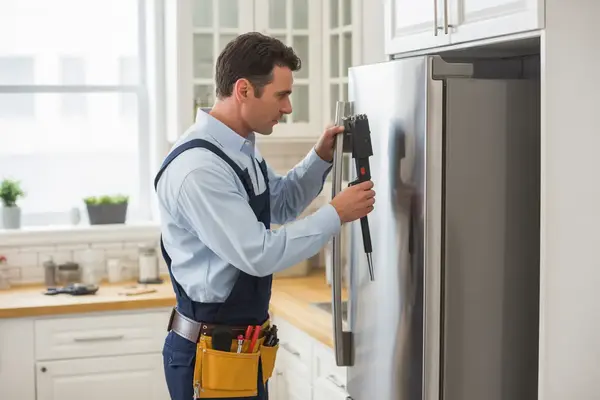
Water Pooling Inside the Refrigerator?
If you notice water collecting under the crisper drawers or on refrigerator shelves, the defrost drain is the top suspect. Door gasket issues and temperature fluctuations can also contribute to internal pooling.
How to Prevent Your Refrigerator From Leaking Water
Preventive maintenance can save you from costly repairs:
- Clean defrost drain every 6–12 months
- Inspect water lines and fittings annually
- Keep door gaskets clean and flexible
- Maintain proper temperature settings
- Avoid blocking air vents
- Ensure fridge is level
When Should You Call a Refrigerator Repair Professional?
While some refrigerator water leaks can be resolved with basic cleaning or minor adjustments, there are situations where professional help is essential. You should call a refrigerator repair professional if the leak continues even after you’ve cleared the defrost drain, checked water lines, and inspected door seals. Persistent leaks often indicate deeper mechanical problems that require expert tools and experience.
If you suspect electrical issues, sealed system failures, or notice water leaking near wiring, control boards, or internal electronics, stop using the appliance immediately and seek professional service.
Water and electricity are a dangerous combination and can lead to short circuits or permanent damage. Additionally, if your refrigerator is still under manufacturer warranty, attempting DIY repairs may void coverage. A certified technician can accurately diagnose the issue, prevent further damage, and ensure the repair is completed safely and correctly.
What Would Cause a Refrigerator to Leak Water Underneath?
Water leaking underneath a refrigerator is usually a sign that the drainage or water supply system isn’t functioning correctly. One of the most common causes is a cracked or damaged drain pan, which allows defrost water to spill directly onto the floor instead of evaporating safely. A loose or damaged water supply line can also drip slowly behind or beneath the appliance, often going unnoticed until water accumulates. In refrigerators with ice makers, a faulty water inlet or ice maker valve may overfill or leak during refill cycles. Additionally, an overflowing defrost system, often caused by a clogged or frozen defrost drain, can send excess water past the drain pan and onto the floor.
How to Unclog a Defrost Drain on a Refrigerator?
To unclog a defrost drain, start by unplugging the refrigerator to ensure safety. Next, locate the defrost drain hole, which is typically found at the back of the freezer compartment beneath the evaporator coils.
Once accessible, flush the drain with warm water using a turkey baster or squeeze bottle to melt ice and loosen buildup. If the blockage persists, gently remove debris using a flexible brush or pipe cleaner. This process restores proper water flow and prevents pooling inside the refrigerator.
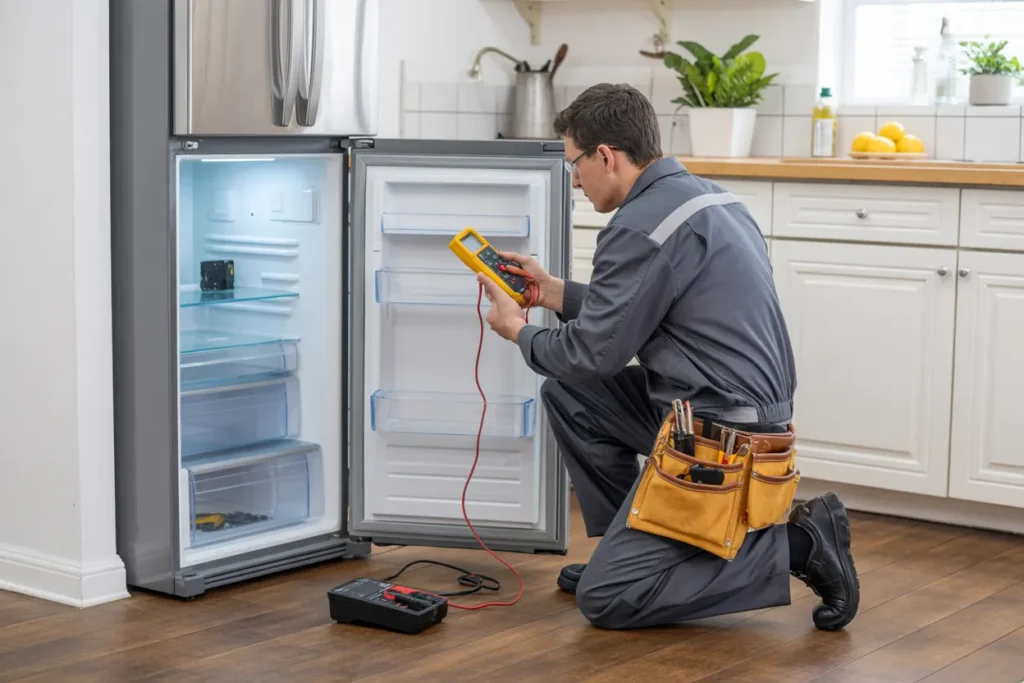
How to Get a Fridge to Stop Leaking Water?
Stopping a refrigerator from leaking water begins with identifying the exact source of the leak—whether it’s the defrost drain, water supply line, ice maker, or door seal. Once the cause is clear, address defrost drain issues by clearing clogs or thawing frozen lines.
Replace any damaged components such as cracked drain pans, worn gaskets, or leaking water valves. If the problem continues or involves electrical or sealed system components, scheduling professional refrigerator repair service is the safest and most effective solution.
Why Is My Frigidaire Refrigerator Leaking Water Out the Front Bottom?
If your Frigidaire refrigerator is leaking water from the front bottom area, the most likely cause is a clogged or frozen defrost drain, which forces water to exit through the front instead of draining properly.
A misaligned or overflowing drain pan can also direct water toward the front of the unit. In many cases, worn door gaskets allow warm air inside, increasing condensation that overwhelms the drainage system. Addressing these issues promptly helps prevent recurring leaks and potential floor damage.
Frequently Asked Questions
Why is my refrigerator leaking water inside?
Most often due to a clogged or frozen defrost drain, poor door sealing, or excess condensation.
How do I stop water from pooling at the bottom of my fridge?
Clear the defrost drain, clean door gaskets, and ensure proper leveling.
Can a clogged defrost drain cause water leaks?
Yes. It’s one of the most common causes of internal refrigerator leaks.
Is a leaking refrigerator dangerous?
It can be. Water near electrical components increases the risk of short circuits and mold growth.
Should I repair or replace a leaking refrigerator?
If the repair cost exceeds 50% of a new unit or the fridge is over 10–12 years old, replacement may be smarter.
Conclusion
A refrigerator leaking water is a problem you should never ignore. From clogged defrost drains to faulty water lines and worn door seals, most leaks stem from identifiable and fixable causes. With timely troubleshooting, regular maintenance, and professional help when needed, you can protect your appliance, your home, and your peace of mind.
If leaks persist or you’re unsure about the repair, contacting a qualified refrigerator repair technician is always the safest and smartest choice.
Contact Info
Information

- 2026
- HomeFixly Appliance Repair.
- All rights reserved.